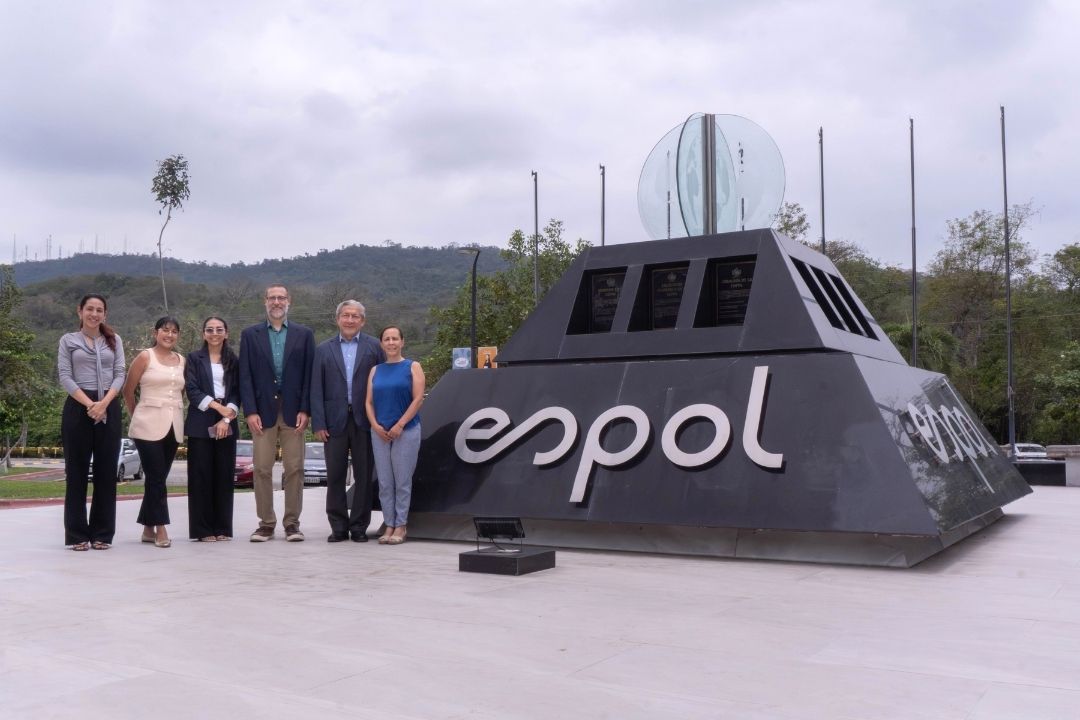


The Faculty of Geosciences Engineering (FICT) at the Escuela Superior Politécnica del Litoral (ESPOL) welcomed a visit from Eng. Mitch Clement, M.Sc., a researcher at the Center for Advanced Decision Support for Water and Environmental Systems (CADSWES) at the University of Colorado Boulder (CU), as part of an academic initiative aimed at strengthening international cooperation, interdisciplinary research, and the development of innovative solutions for the sustainable management of water and energy resources.
The visit was organized in coordination with the Faculty of Natural Sciences and Mathematics (FCNM), the Center for Water and Sustainable Development (CADS), the UNESCO Chair in “Geosciences Applied to Sustainable Development,” and the Center for Research and Applied Projects in Earth Sciences (CIPAT), thereby establishing a forum for academic exchange to share experiences, knowledge, and best practices in addressing global challenges.
1. Academic and Institutional Coordination Meeting
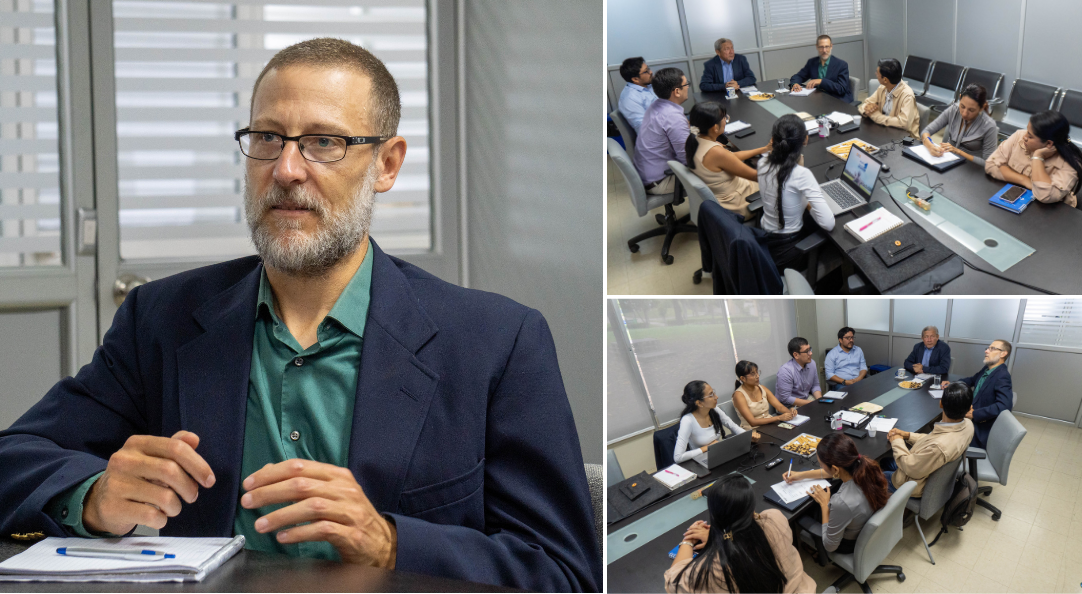
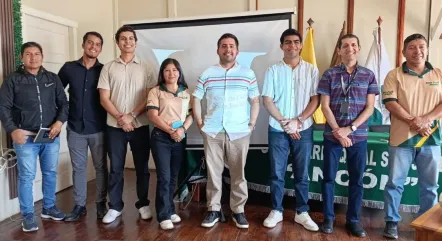
On September 14, Master Clement was welcomed at the FICT Dean’s Office by ESPOL officials and faculty members. The meeting was attended by Paúl Carrión, Ph.D., dean of FICT; Kenny Escobar, M.Sc., associate dean; Cecibel Castillo, M.Sc., coordinator of the Petroleum Engineering program; Joselyne Solórzano, M.Sc., coordinator of the Geology program; Josué Briones, M.Sc., coordinator of the Master’s in Earth Sciences program; and Daniella Mora, M.Sc., laboratory technician. Representing the FCNM were Paola Almeida, Ph.D.; Luis Domínguez Granda, Ph.D., director of CADS; and Ashley Castro, executive assistant at the FCNM.
During the meeting, opportunities for academic and scientific collaboration between ESPOL and CU were discussed, with a focus on developing joint projects, specialized training programs, academic exchanges, and strengthening institutional capacities. Additionally, participants reflected on the importance of advanced decision-support tools for natural resource management in the face of climate variability and extreme hydrometeorological events.
2. Meeting with ESPOL officials and strategic planning session with CELEC SUR
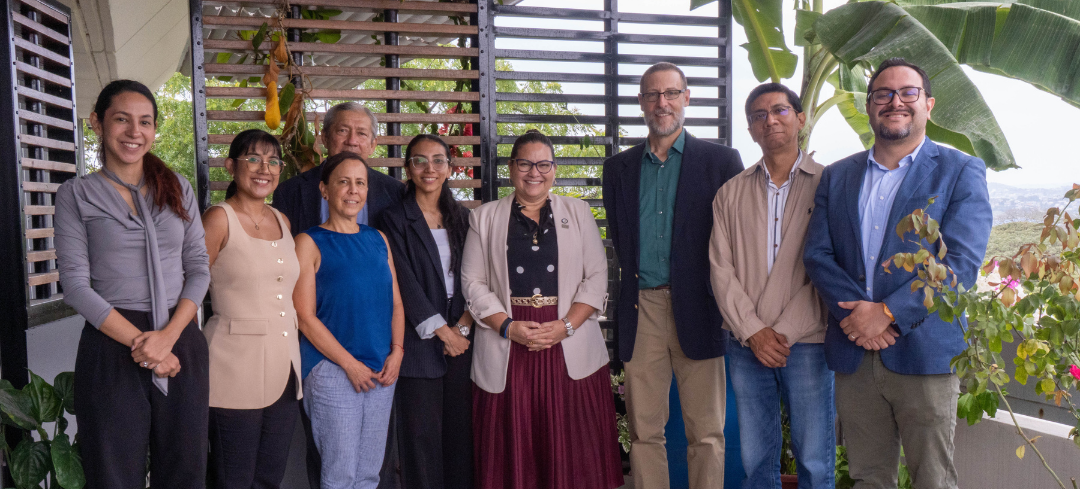
As a key part of his institutional agenda, Master Clement held a meeting with the president of ESPOL, Cecilia Paredes Verduga, Ph.D. During this strategic meeting, priority areas for cooperation were identified, aimed at developing applied research projects with an international scope.
In particular, the session evaluated opportunities to explore projects and synergies within the framework of the existing agreement between ESPOL and CELEC SUR, titled: “Applied Research Project on Geological and Geotechnical Studies for the CELEC-SUR Business Unit’s Program for the Management of Unstable Areas,” opening the opportunity to apply cutting-edge computational and hydrological modeling tools to the management and sustainability of water resources linked to the country’s energy infrastructure.
3. Visit to CIPAT and Interdisciplinary Dialogue
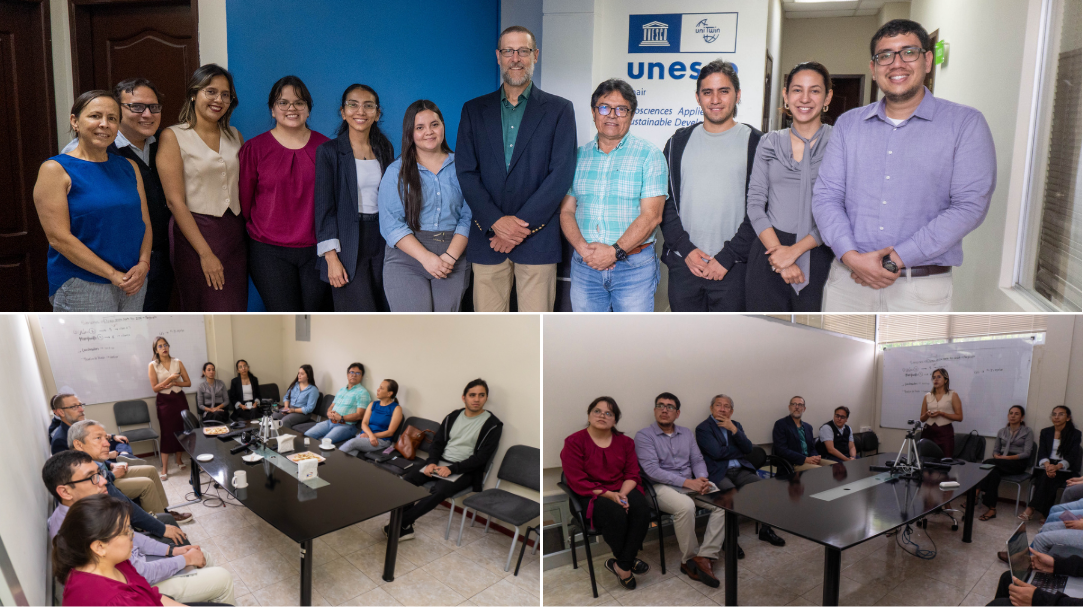
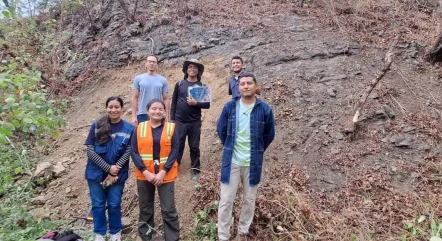
As part of the work agenda, a visit was made to the facilities of the Center for Research and Applied Projects in Earth Sciences (CIPAT) alongside researchers. During this meeting, the group presented their experience and the projects carried out in the Galápagos Islands, highlighting the methodologies applied to the study and conservation of natural resources in highly fragile island environments.
The session also featured Professor Manuel Álvarez, Ph.D., from the Faculty of Electrical and Computer Engineering (FIEC), who contributed his technical expertise on topics related to hydroelectric power generation and infrastructure, fostering a space for interdisciplinary exchange between Earth sciences and electrical engineering.
4. Conference Day Featuring Specialized Presentations
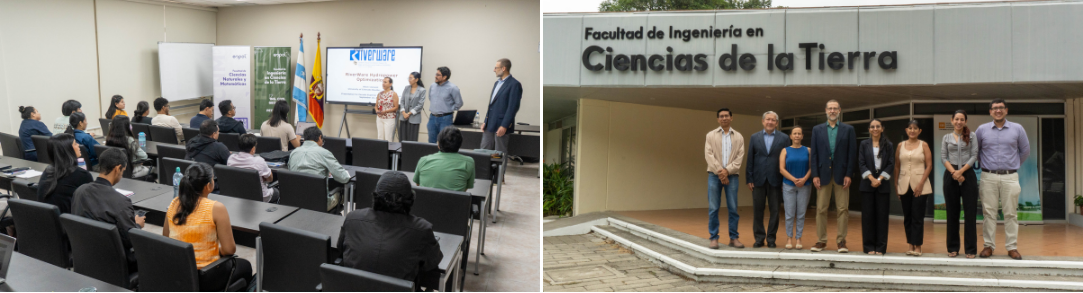
On September 15, a technical workshop open to students, researchers, and professionals was held:
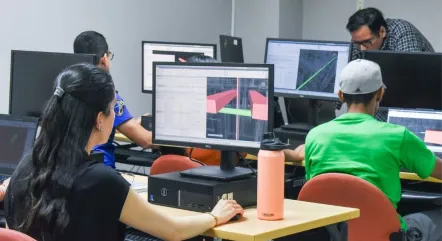
1. “Hydropower Optimization”: Master’s student Clement presented methodologies and computational models aimed at optimizing the operation of hydropower systems, maximizing energy generation, increasing the resilience of the infrastructure, and promoting environmental sustainability.
2. “Decision Making with Hydrological Uncertainty (Tools)”: The session addressed quantitative tools for decision-making under scenarios of hydrological uncertainty (droughts, climate variability, and future water availability), enabling more robust planning frameworks.
Contribution to the Sustainable Development Goals (SDGs)
This academic visit and the resulting initiatives are directly aligned with ESPOL’s institutional commitment to the 2030 Agenda, contributing to the following Sustainable Development Goals:
SDG 6—Clean Water and Sanitation: Promoting integrated water resources management and efficient water use in the face of droughts and hydrological uncertainty.
SDG 7 – Affordable and Clean Energy: Promoting the optimization of hydroelectric power generation and the efficient planning of sustainable energy systems.
SDG 9 – Industry, Innovation, and Infrastructure: Fostering applied research and resilience in energy infrastructure (such as in the CELEC-SUR program).
SDG 13 - Climate Action: Developing capabilities in hydrological modeling and decision-making in the face of climate change and extreme events.
SDG 17 - Partnerships for the Goals: Strengthening international cooperation networks among ESPOL, the University of Colorado Boulder, and strategic public sector stakeholders.