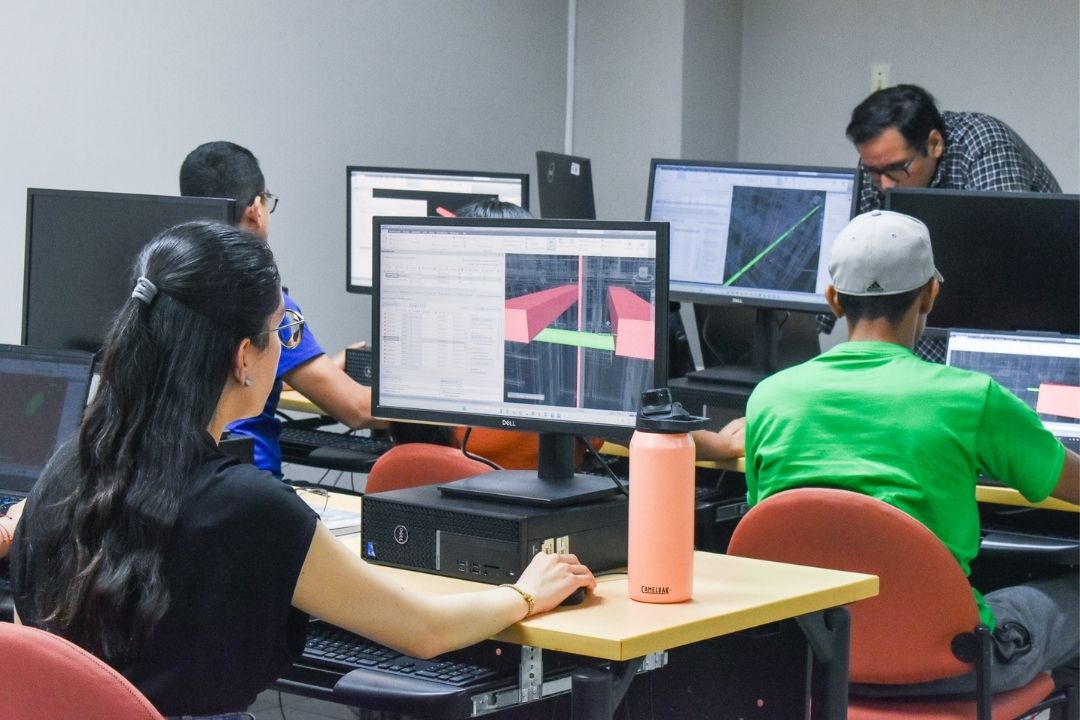


The digital transformation of the construction sector requires professionals capable of integrating new technologies and tools to improve project planning, coordination, and management processes. In this context, students from the 8th cohort of the Master’s in Civil Engineering with a concentration in Construction and Sanitation participated in an in-person academic workshop aimed at strengthening their digital and strategic skills.
As part of the course “Construction Management Using BIM Methodology” taught by Víctor Orozco, M.Sc., an engineer and specialist in the field—the master’s students engaged in hands-on activities focused on the application of digital tools used in construction project management.
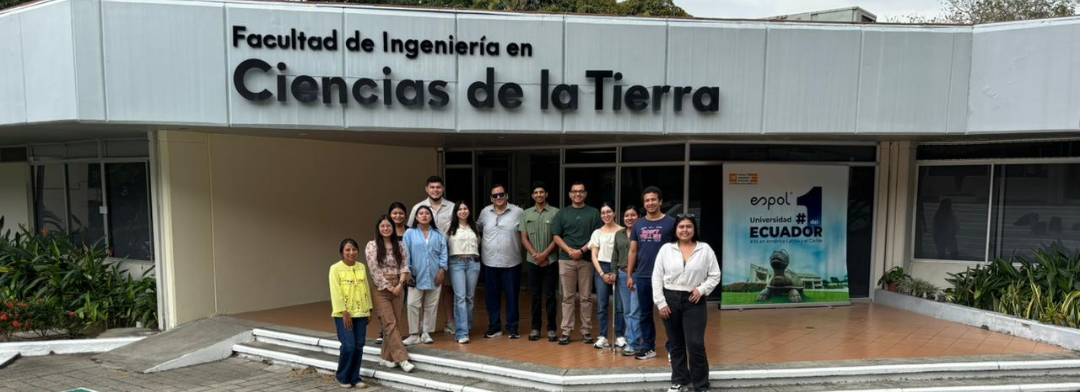
During the workshop held at the Faculty of Geosciences Engineering (FICT), students worked with models in Navisworks, exploring tools for model coordination. They also applied the fundamentals of quantity takeoff using Revit, strengthening their knowledge of how to use digital models to support planning and management processes in construction.
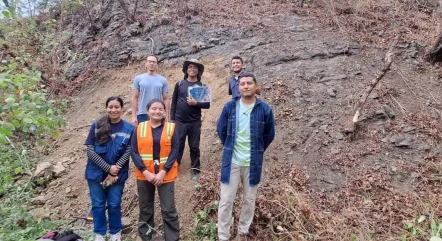
The academic experience also included an exploration of reality-capture tools using photogrammetry, applied to the recording and monitoring of construction projects. This activity allowed students to learn about the potential of these technologies for documenting and generating information in construction projects.
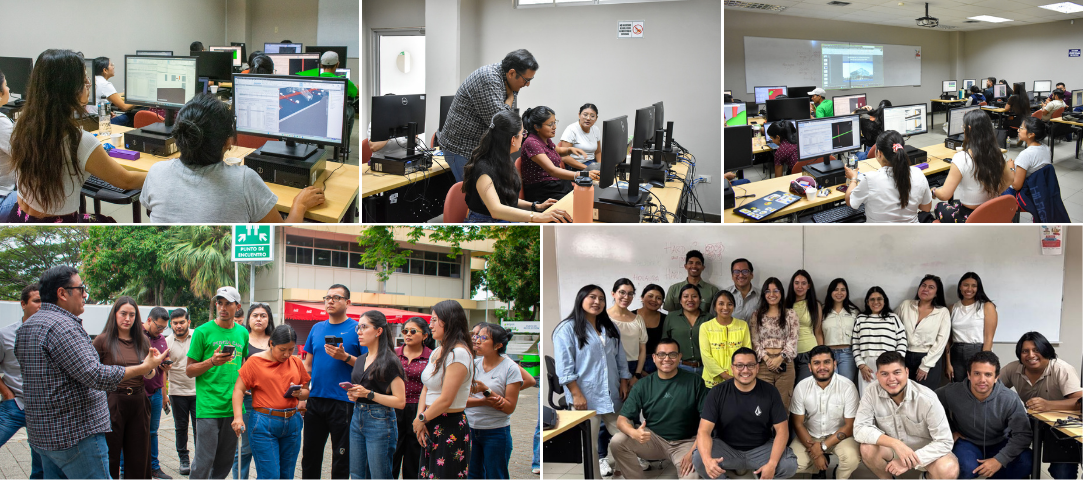
In addition to academic activities, the master’s students in the 8th Cohort had the opportunity to explore the campus and its facilities, strengthening their connection to the university community and creating opportunities to interact with their classmates and colleagues.
These learning sessions strengthen students’ strategic digital competencies by combining technology, innovation, and practical application. They also reflect the commitment of the Master’s in Civil Engineering with a concentration in Construction and Sanitation at ESPOL Graduate Studies to providing an education that addresses the current needs and challenges of the construction industry.
This experience contributes to SDG 4: Quality Education, by strengthening specialized skills and applied learning; and to SDG 9: Industry, Innovation, and Infrastructure, by promoting the incorporation of digital tools and technologies into construction project management.