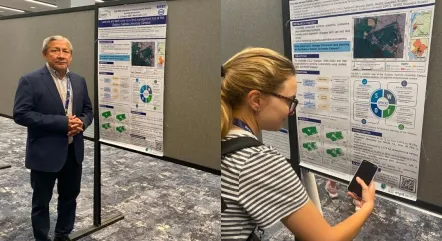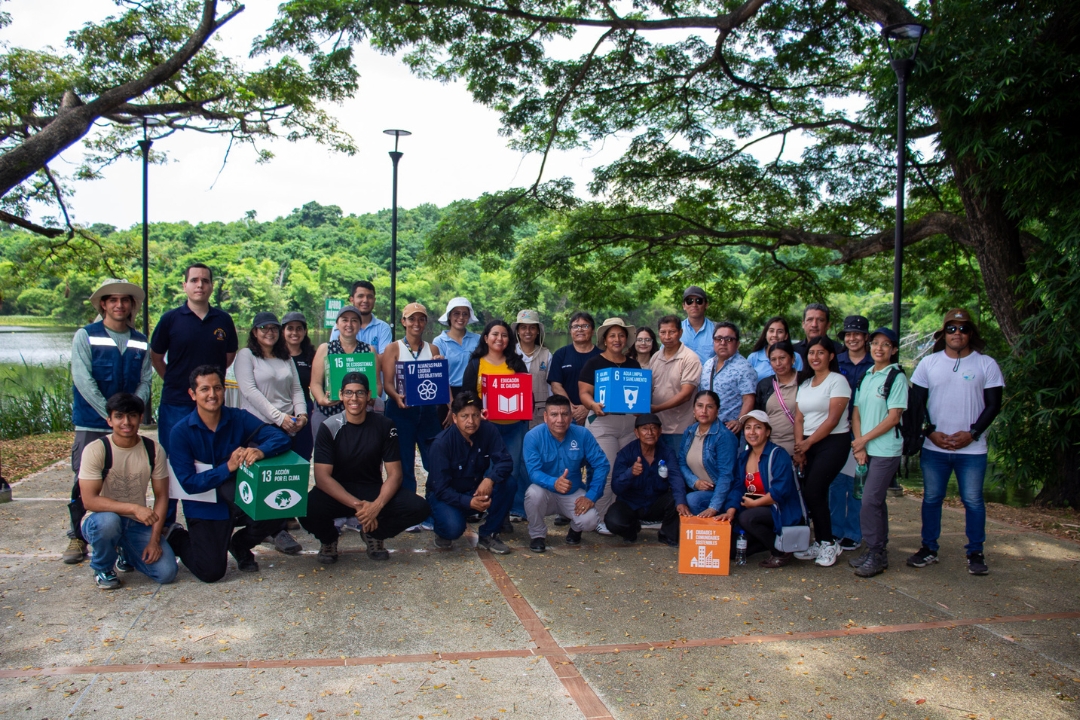

As part of World Water Day, the Escuela Superior Politécnica del Litoral (ESPOL), through the first UNESCO Chair in Geosciences Applied to Sustainable Development, the Center for Research and Applied Projects in Geosciences (CIPAT), and the Faculty of Geosciences Engineering (FICT), organized the ecohydrological tour “Hidrogeodía 2026,” an academic activity aimed at promoting applied knowledge on sustainable water management.
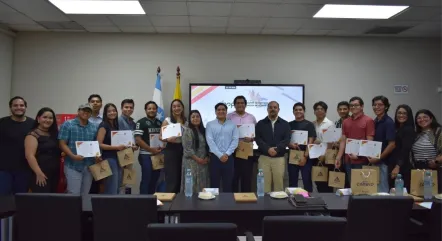
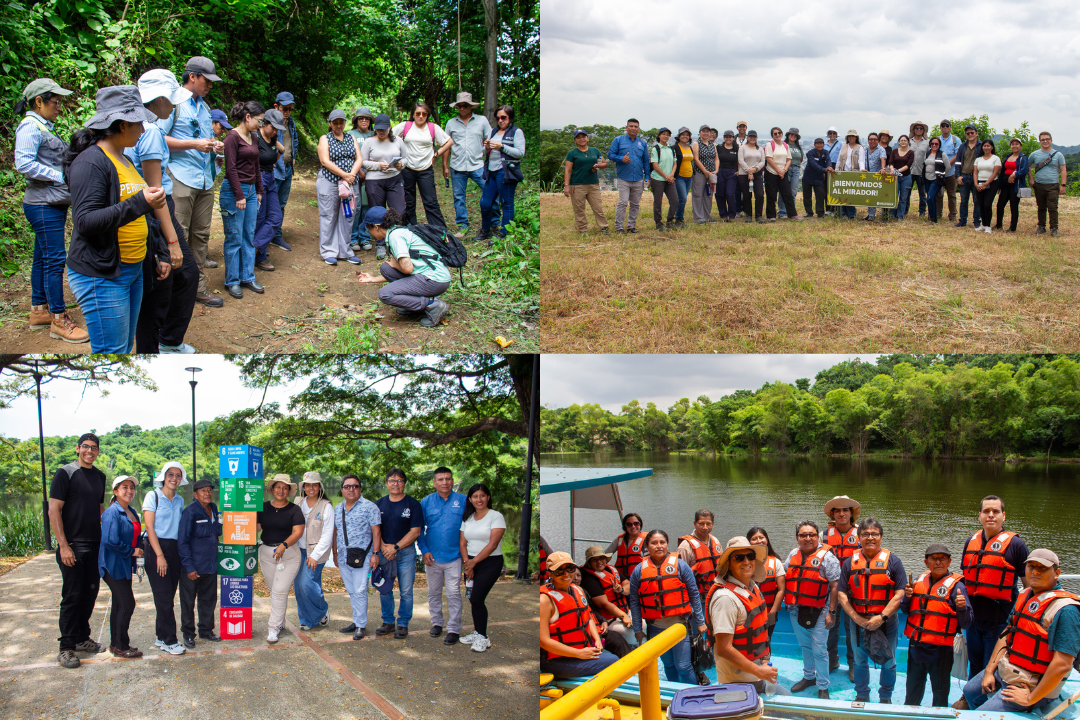
The in-person event brought together students, faculty, and professionals in a space for learning and technical exchange, highlighting the active participation of women in field activities related to ecohydrology, the analysis of water systems, and the implementation of interdisciplinary approaches to environmental sustainability.
The guided tour included several representative sites on the polytechnic campus, including the La Prosperina Protected Forest, the “Cuevas” Albarrada, the ESPOL Lookout, and the artificial lake in front of the Faculty of Maritime Engineering and Marine Sciences—areas that serve as study sites for understanding the interaction between natural systems and engineering solutions aimed at the efficient management of water resources.
During the event, participants explored concepts related to ecohydrology, the management of natural and artificial water systems, and the application of Nature-Based Solutions (NbS) as strategies to strengthen ecosystem resilience and contribute to environmental sustainability. These forums serve as living laboratories that integrate scientific research with academic training, promoting a comprehensive approach to water management.
The event was supported by national and international partners, including the International Association of Hydrogeologists (Spanish Group), CYTED, and the NbS-GIA initiative. It also received support from the “Manglaralto River-Aquifer System” Ecohydrology Demonstration Site, recognized by UNESCO as a space for the integration of science, education, and sustainable water management.
This experience strengthened the connection between theory and practice, promoting environmental awareness and a commitment to the responsible management of water resources, for the benefit of ecosystems and communities.
Sustainable Development Goals (SDGs)
This initiative contributes to the achievement of the following SDGs: