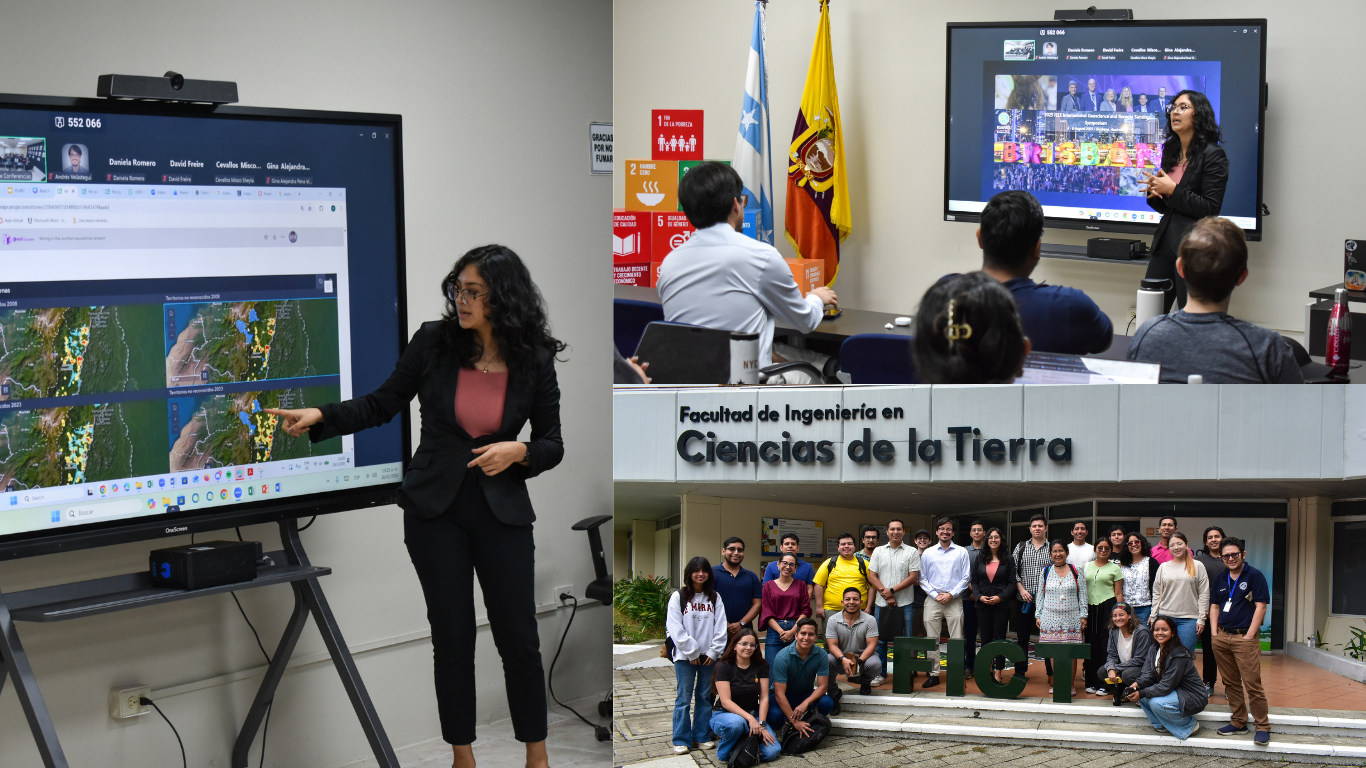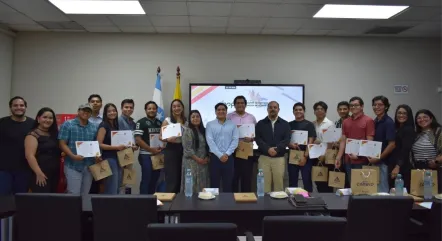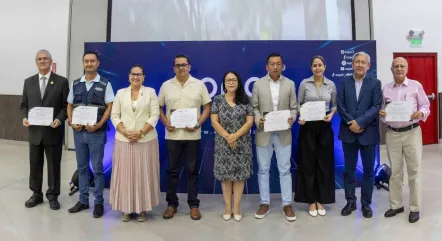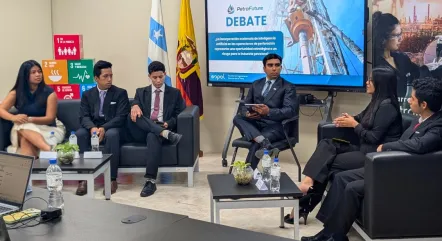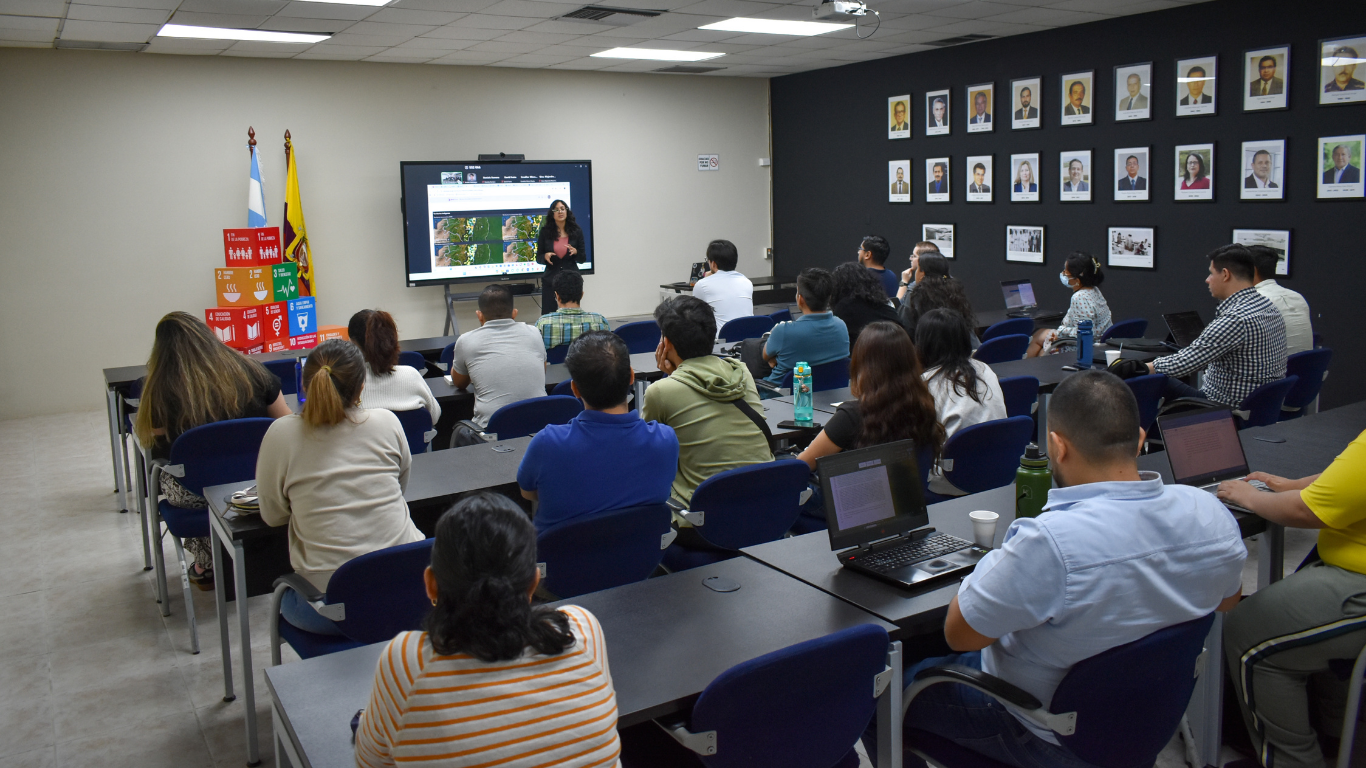

The Faculty of Geosciences Engineering (FICT) at ESPOL developed the academic talk 'Exploring the Amazon from Space: GIS and Remote Sensing in University Education,' a space aimed at strengthening university training through the use of geospatial tools applied to the analysis of environmental issues in the country.
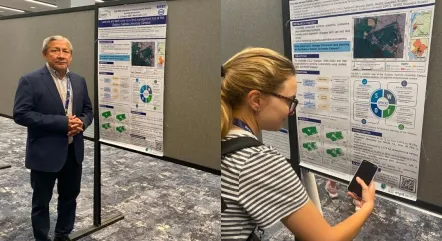
The main objective of this activity was the presentation of a scientific article focused on the analysis of illegal mining activity, a phenomenon that is currently expanding in the province of Zamora Chinchipe. The relevance of the study lies in the limited existence of systematic research evaluating the impacts of illegal mining in this area of the country; therefore, the socialization of its results constitutes a key opportunity to raise awareness of the issue and promote timely actions before its effects intensify.
During the talk, it was highlighted that the research seeks to contribute to informed decision-making by authorities and local stakeholders through the use of Geographic Information Systems (GIS) and remote sensing techniques. These tools allow for the identification of spatial patterns, territorial dynamics, and land-use changes associated with mining activity. Their dissemination is essential for preventing environmental and social risks, as well as for strengthening sustainable territorial management in the Amazon region.
Additionally, it was emphasized that the study is not limited to a technical analysis but integrates environmental, social, and territorial considerations, offering a comprehensive view of the impacts of mining expansion in Zamora Chinchipe and its relationship with sustainable development.
This academic activity aligns with the Sustainable Development Goals (SDGs) of the 2030 Agenda, particularly with:
SDG 11: Sustainable Cities and Communities.
SDG 13: Climate Action.
SDG 15: Life on Land.
SDG 16: Peace, Justice, and Strong Institutions.