

Written by Mónica G. Santos
Wednesday, June 26, 2025 – 08:00
A Critical Challenge for Santa Cruz
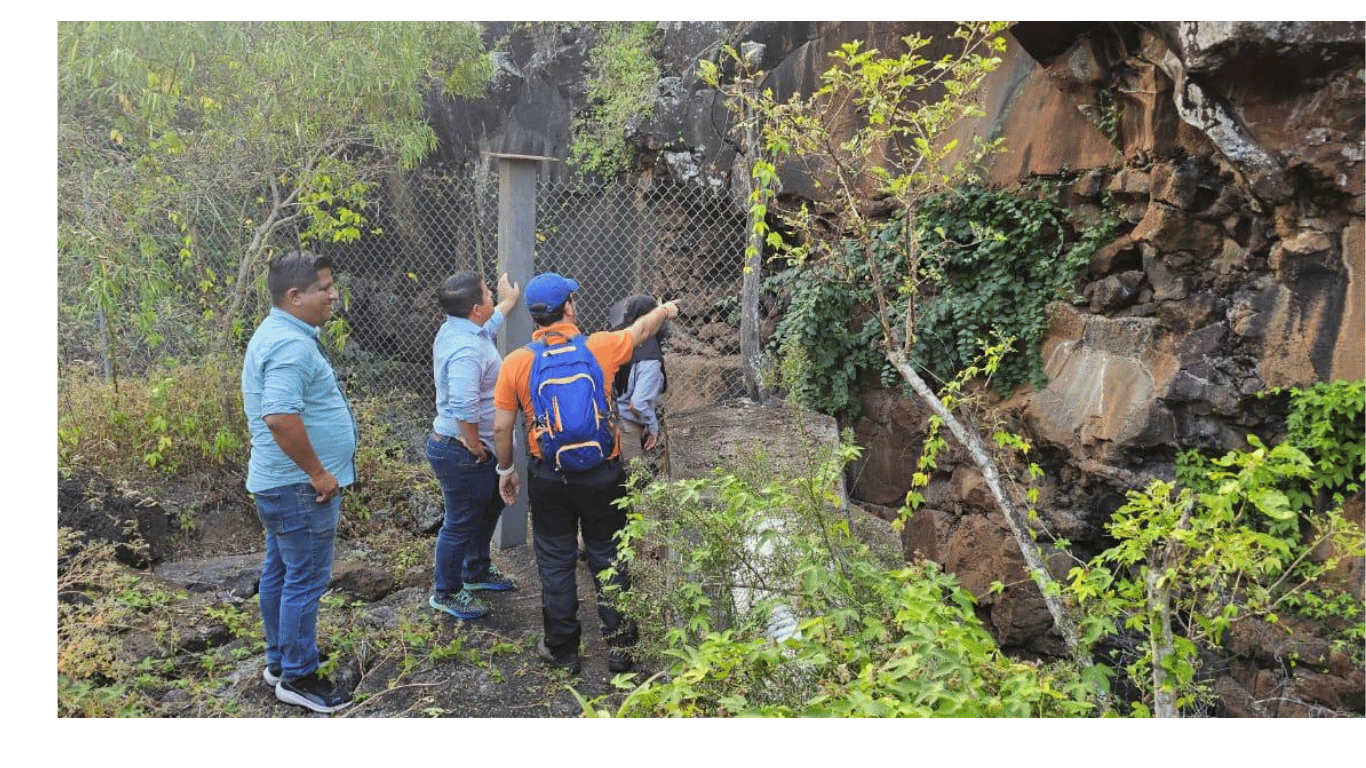
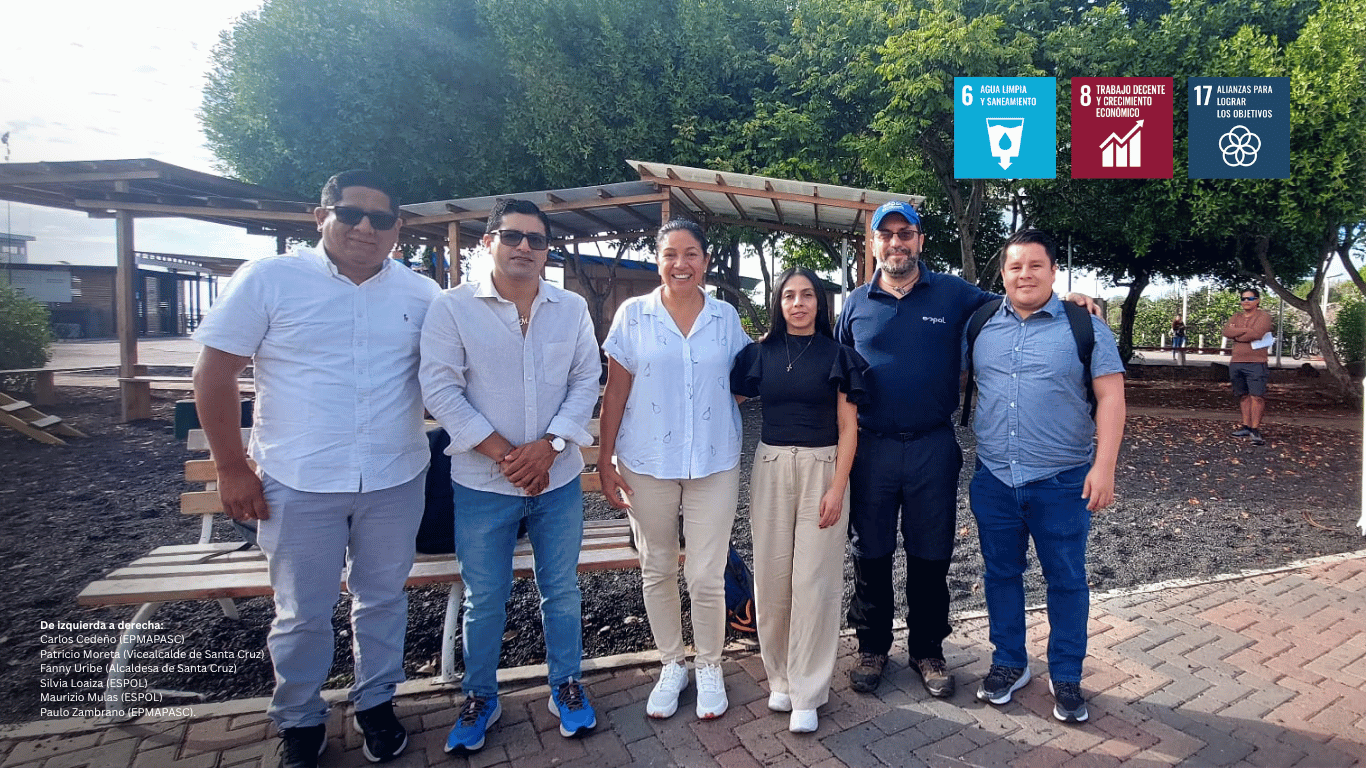
The ‘La Camiseta’ water intake infrastructure, with a capacity of 5,000 m³/day and the only active water source for the canton, has suffered a rockfall that compromises its stability and directly affects both the pumping system and the technical personnel working on-site. To address this emergency, the Municipal Public Water and Sewerage Company of Santa Cruz (EPMAPASC) requested the technical-scientific support of the Escuela Superior Politécnica del Litoral (ESPOL). A multidisciplinary team—including geology and geotechnics experts Ph.D. Silvia Loaiza and Ph.D. Maurizio Mulas, research professors from the Faculty of Geosciences Engineering (FICT)—carried out a preliminary assessment of the risks.
The potential collapse of the access stairs, the conveyance pipeline, and other vital components posed a risk to the operation of the pumping system and to the physical safety of the technical personnel accessing the site.
‘The water intake infrastructure is essential for the water supply, and its collapse would leave Santa Cruz without this vital resource,’ explained Ph.D. Silvia Loaiza. ‘We went to assess the situation in order to later determine the risks and propose viable solutions.’
ESPOL’s Role in the Geotechnical and Structural Assessment
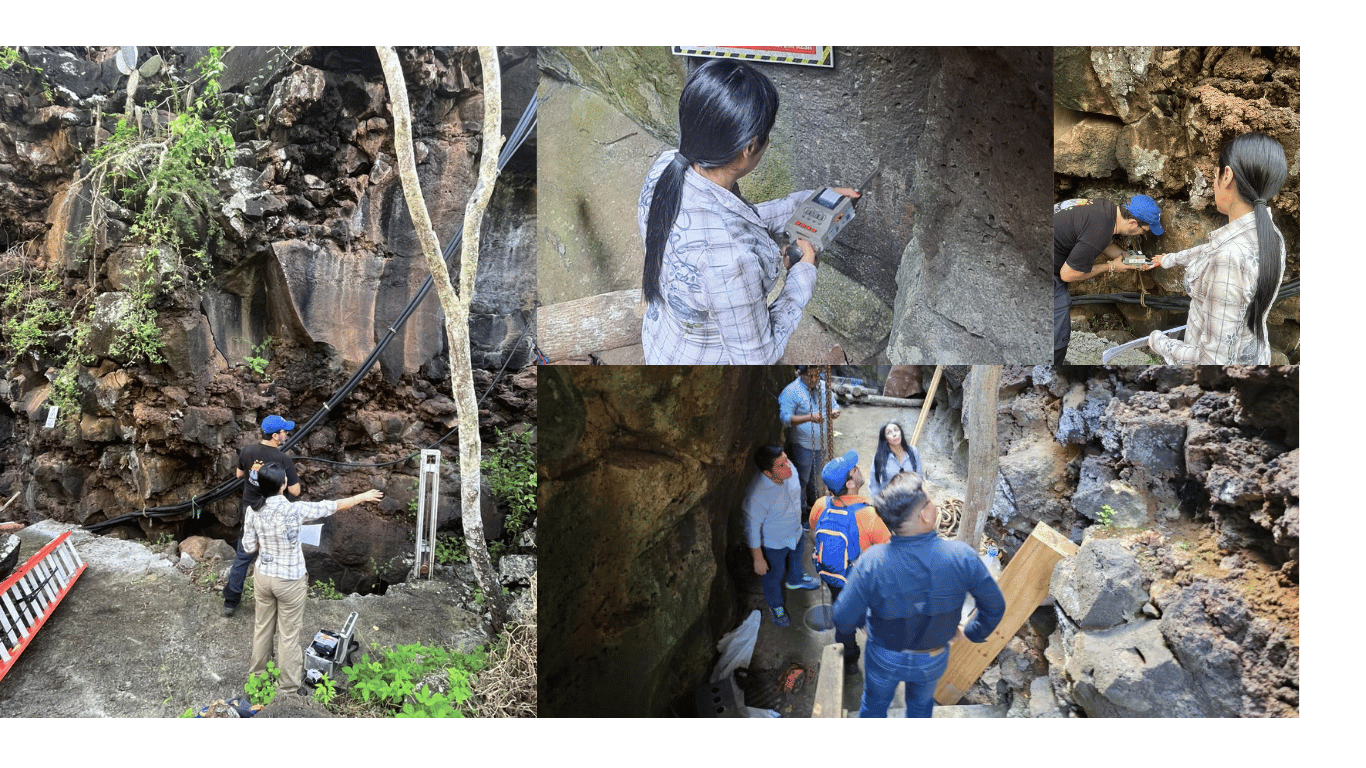
The team analyzed the stability of the rock mass using technical instrumentation, tools, and methodologies to interpret the data collected in the field. Ph.D. Maurizio Mulas, a volcanology expert, highlighted: ‘Geological and geotechnical assessment is crucial to understanding how the rocks in this volcanic environment interact with the water intake system.’
Recommendations for Ensuring the Future Safety of the Water Supply
As the analysis progressed, Ph.D. Loaiza emphasized several key recommendations to ensure the continuity of the drinking water supply in Santa Cruz. Among them are the implementation of structural protection measures for the affected infrastructure, the diversification of water intake sources to reduce dependence on a single system, and the constant monitoring of conditions in the area.
‘The main recommendation is to address this risk comprehensively. It is urgent to stabilize the affected infrastructure, but we must also think long-term by characterizing the current resource and evaluating other water sources,’ Loaiza stated.
A More Resilient Future for Galápagos
This type of collaboration between academic and public institutions is not only vital for resolving the current crisis, but also lays the foundation for more efficient and sustainable management of natural resources in the region. Ph.D. Loaiza and Ph.D. Mulas conclude that this joint effort between ESPOL and EPMAPASC will contribute to the resilience of Santa Cruz and other areas of the Galápagos, addressing similar challenges with solutions grounded in technical and scientific knowledge.
‘This kind of interinstitutional work is essential not only to resolve the emergency, but also to strengthen local capacities and ensure responsible natural resource management in the future,’ Loaiza concluded.
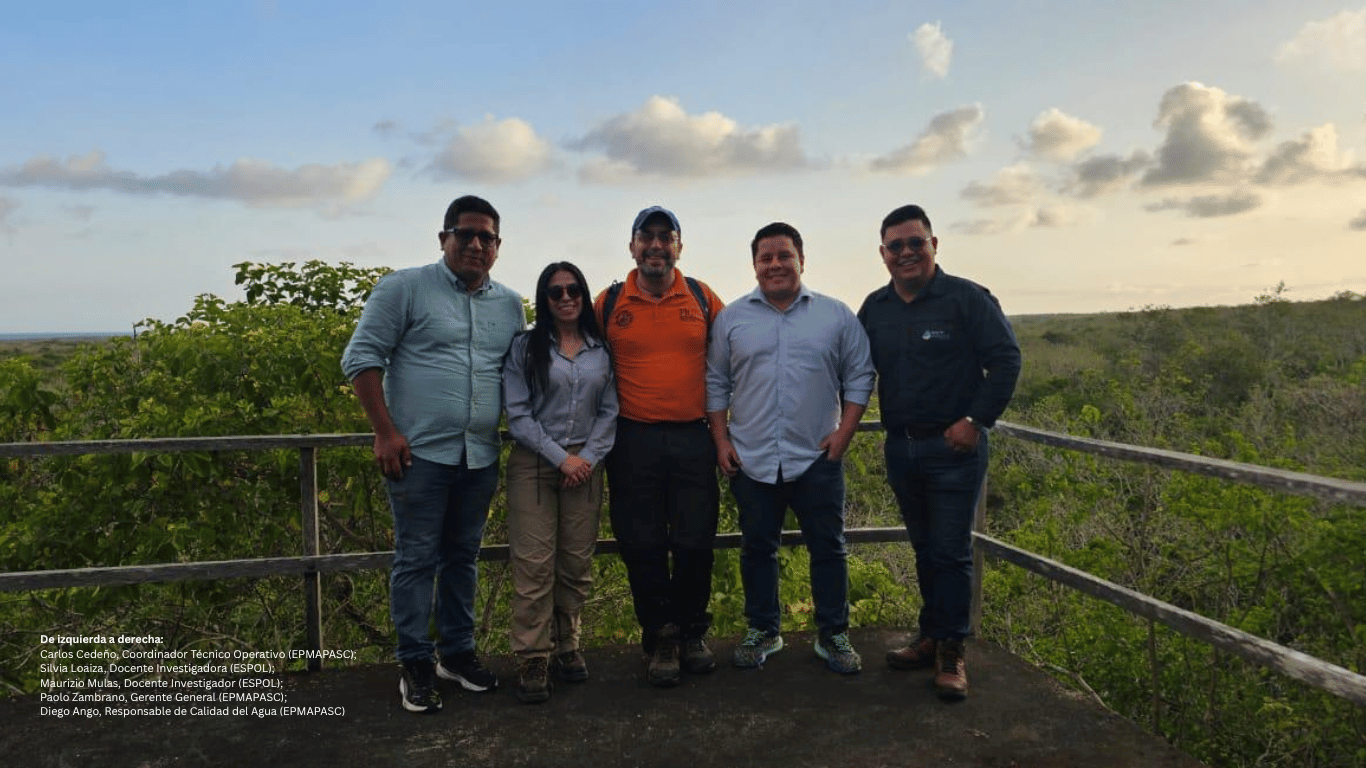
Thanks to the support of Ph.D. Silvia Loaiza and Ph.D. Maurizio Mulas, EPMAPASC will be able to make the decisions and take the necessary measures to ensure the supply of drinking water to the Santa Cruz community.