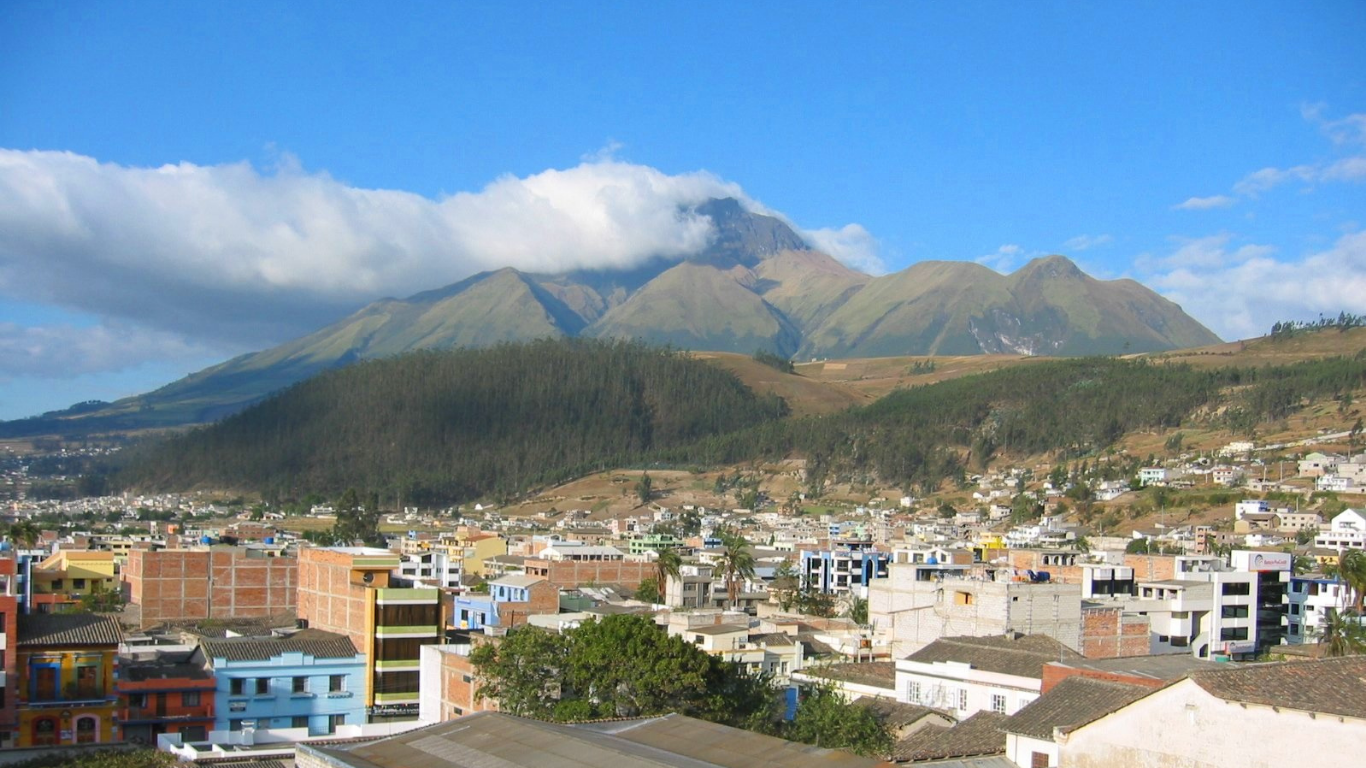

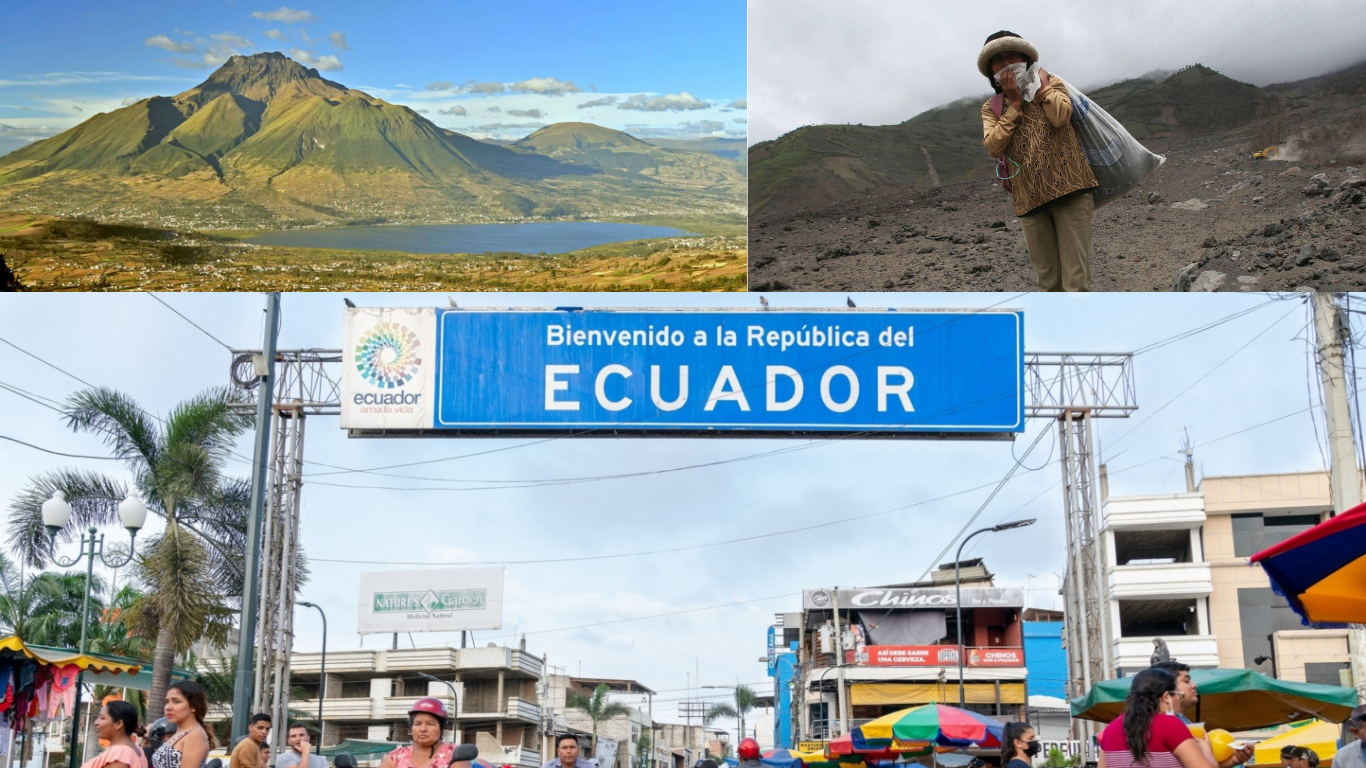
Ecuador is one of the countries with the highest volcanic activity in Latin America due to its location along the Pacific Ring of Fire. This geodynamic condition permanently exposes the national territory to volcanic hazards that pose significant risks to the population, public health, and the economy. It is estimated that nearly 35% of Ecuador’s population lives in areas under volcanic influence, increasing vulnerability to active or potential eruptive processes.
Active Volcanoes in Ecuador
The country has numerous active and potentially active volcanoes, distributed across both the mainland region and the Galápagos archipelago. Among the main volcanoes with historical or recent activity are:
Cotopaxi, one of the highest active volcanoes in the world, with direct influence on densely populated areas.
Tungurahua, whose recurrent eruptive activity has affected communities, agriculture, and infrastructure for decades.
Reventador and Sangay, characterized by almost continuous activity, with ash emissions and lava flows.
Guagua Pichincha, located near Quito, with significant potential urban impact.
Chiles–Cerro Negro, on the northern border, with recurrent episodes of volcanic seismicity.
In the Insular region, volcanoes such as Sierra Negra, La Cumbre, and Wolf frequently erupt, impacting local ecosystems and productive activities.
The interaction between these volcanic systems and populated areas makes volcanic risk management a priority challenge for the country.
Impacts of Volcanic Eruptions on Public Health
Volcanic eruptions, particularly ash fall, produce multiple adverse effects on human health. The main impacts include:
Respiratory conditions, such as asthma, bronchitis, irritation of the respiratory tract, and exacerbation of chronic lung diseases.
Ocular and dermatological problems, including conjunctivitis, irritation, and skin lesions.
Contamination of water sources, which can lead to gastrointestinal illnesses.
Mental health impacts, associated with stress, anxiety, forced displacement, economic losses, and prolonged exposure to hazardous conditions.
These effects are intensified in rural and indigenous communities, where access to healthcare services, timely information, and preventive resources is limited.
Economic Impacts of Volcanic Ash Fall
Volcanic eruptions also produce significant economic consequences, including:
Losses in agriculture and livestock, due to crop damage and contamination of soil and pastures.
Damage to infrastructure and basic services, including roads, airports, water supply systems, and electricity networks.
Decrease in commercial and tourism activity, due to service disruptions and mobility restrictions.
Increased public health expenditure, associated with emergency care and diseases related to ash exposure.
These economic impacts deepen social inequalities and increase the vulnerability of affected populations.
Institutional Gaps and Challenges in Risk Management
The study identifies significant gaps in volcanic risk governance, inter-institutional coordination, epidemiological surveillance, and risk communication, particularly in rural and hard-to-reach areas. These limitations reduce the health system’s capacity to respond effectively to volcanic events of varying magnitudes.
An Integrated Approach for Resilience: One Health
In this context, the research proposes adopting a One Health approach, which integrates geological, biomedical, environmental, and social sciences. This approach allows for a comprehensive understanding of the interactions between volcanism, human health, ecosystems, and socio-economic dynamics, strengthening the health system’s preparedness and response to volcanic hazards.
Scientific Publication
The scientific article was published in Frontiers, section Disaster and Emergency Medicine, Volume 13 (2025), supporting the academic quality and international relevance of the findings.
Read more about the study and its conclusions [HERE].
Researchers and Affiliations
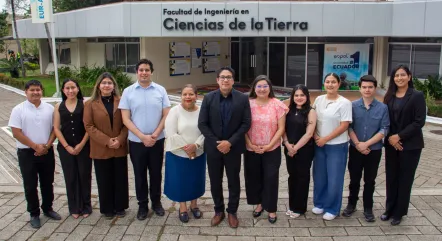
This study, led by Katherine Simbaña-Rivera, was developed by Maurizio Mulas, Ph.D., geologist and volcanologist, researcher and coordinator of the Graduate Programs at the Faculty of Engineering in Earth Sciences, ESPOL, in collaboration with national and international research groups and investigators:
1ECUAVOLCAN Research Group, Centro de Investigación para la Salud en América Latina (CISeAL), Pontificia Universidad Católica del Ecuador (PUCE)
Quito, Ecuador
Participating researchers:
Katherine Simbaña-Rivera1,2
Damary S. Jaramillo-Aguilar
Jhon Paul Guerrero-Gonzalez
Ruth Jimbo-Sotomayor
Xavier Sánchez
Additionally, researchers from the:
2Toxicology Unit, Research Institute of Biomedical and Health Sciences (IUIBS), University of Las Palmas de Gran Canaria (ULPGC)
Las Palmas de Gran Canaria, España
Researchers:
Luis D. Boada
The interdisciplinary and inter-institutional collaboration strengthens the generation of applied scientific knowledge aimed at reducing volcanic risk and protecting public health in areas of high natural exposure.