


The Faculty of Geosciences Engineering (FICT) at the Escuela Superior Politécnica del Litoral (ESPOL) is pleased to announce that the research project “Monitoring of soil health bioindicators in syntropic agroforestry food systems in the Amazon,” submitted to the Pro -Amazonia call for proposals, has been approved and fully funded by the National Conselho Nacional de Desenvolvimento Científico e Tecnológico (CNPq), in cooperation with the Amazon Cooperation Treaty Organization (ACTO).
The Pro-Amazonia – CNPq/ACTO call for proposals seeks to support research projects that contribute significantly to scientific, technological, and innovation development in the Amazon region.
Project objective
The project aims to develop a comprehensive information system for soil health bioindicators in syntropic agroforestry food systems in the Amazon, integrating Geographic Information Systems (GIS) and Remote Sensing tools for analysis, monitoring, and land management.
The expected results will optimize the planning and sustainable use of production systems, generating high-quality scientific information to support decision-making and contribute to environmental and food sustainability in the Amazon region.
Participating institutions
The project will last two years and is led by the Universidade Federal Rural da Amazônia (UFRA), with the participation of researchers from the Universidade Federal do Pará (UFPA) and the Escuela Superior Politécnica del Litoral (ESPOL). This collaboration strengthens academic and scientific cooperation between Brazil and Ecuador, consolidating international research networks in the Amazon region.
ESPOL's participation
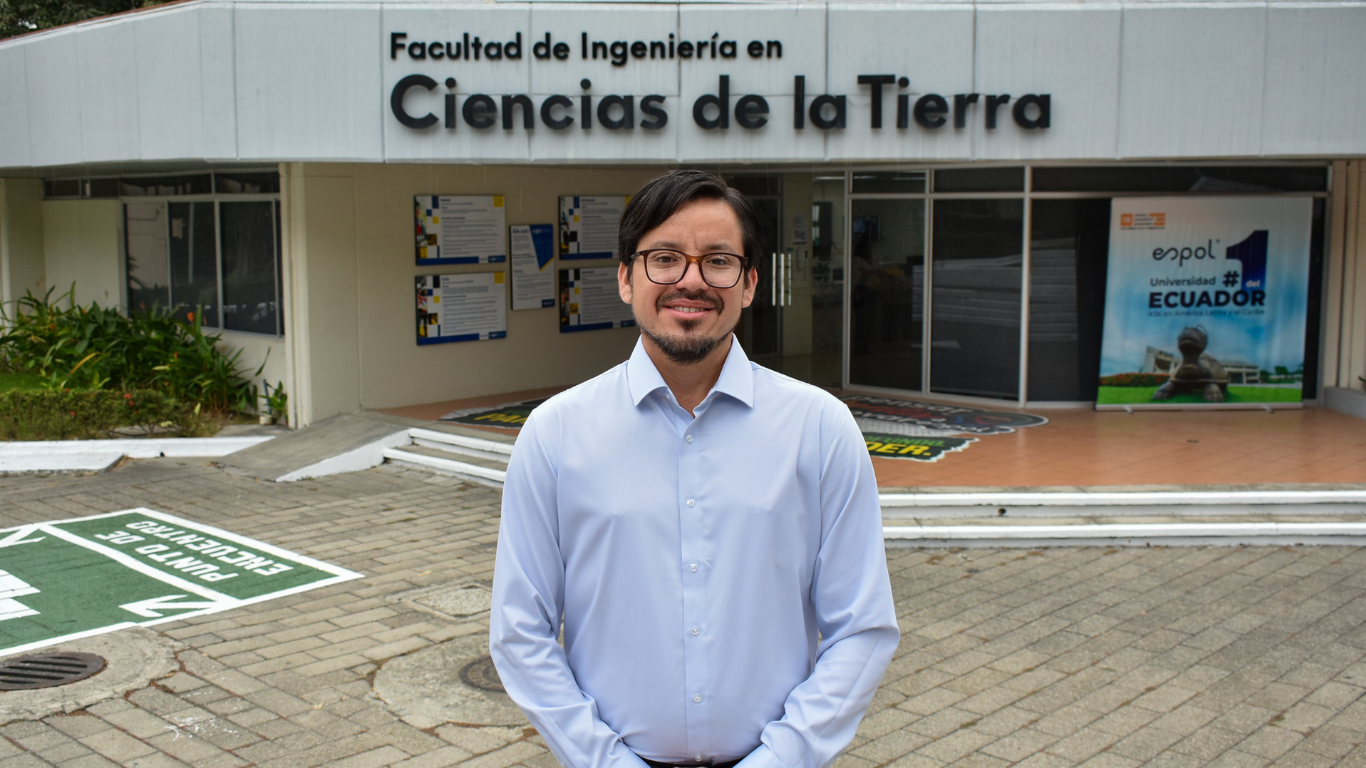
ESPOL's participation is through Ph.D. Andrés Velástegui, as a foreign expert researcher, who will be responsible for the management, analysis, and production of the project's geographic information, strengthening the scientific collaboration networks of the Geoinformation and Remote Sensing Laboratory.
This collaboration includes the generation of scientific products, participation in international conferences, and research stays, contributing to the strengthening of institutional capacities and scientific networks in GIS and Remote Sensing applied to the Amazon.
This achievement consolidates ESPOL's institutional commitment to applied research, international cooperation, and the generation of scientific knowledge focused on the strategic challenges of the Amazon region.