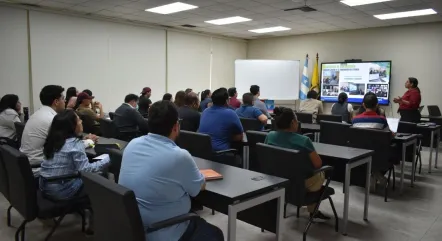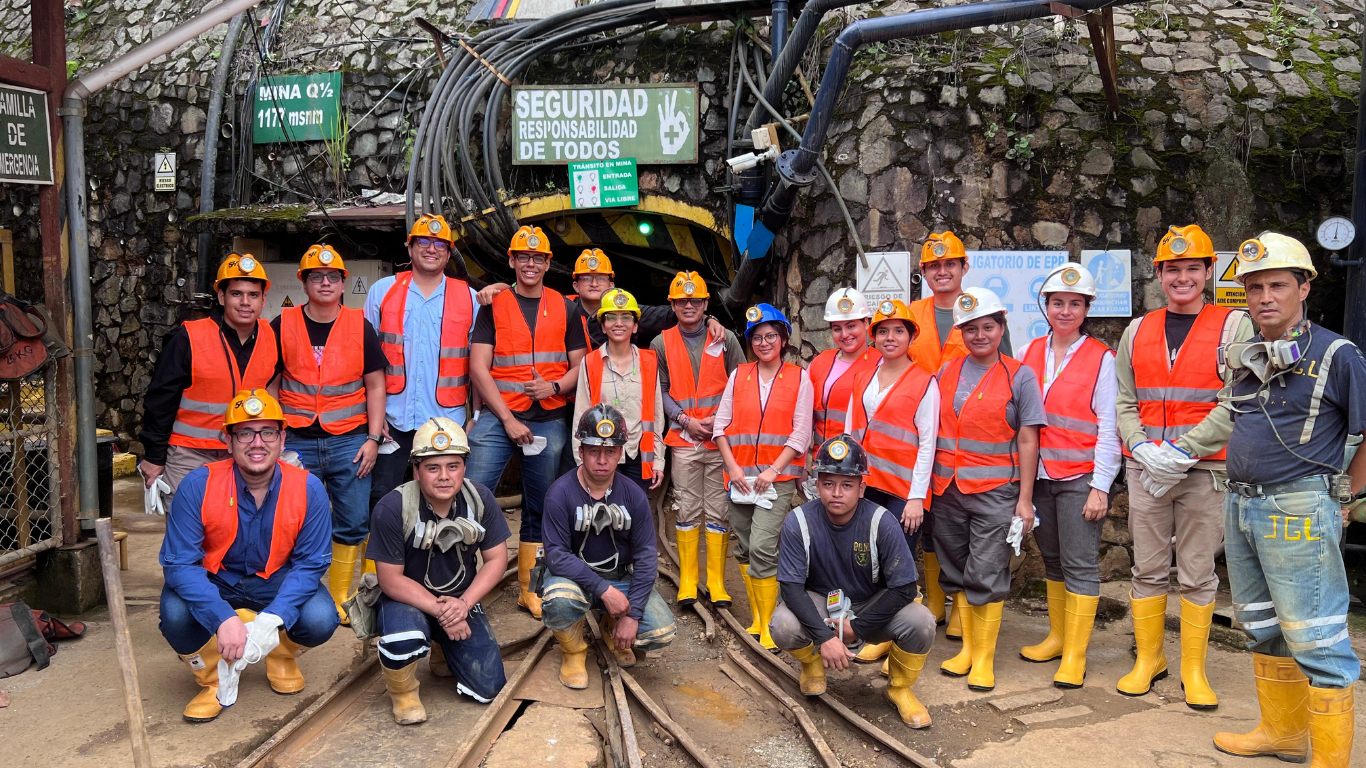


As part of the comprehensive academic training of the Geology program, students from the Faculty of Engineering in Earth Sciences at ESPOL carried out a field trip to the mining company BIRA Bienes Raíces S.A. and to the El Sexmo tourist mine, located in the city of Zaruma, one of the most important mining districts in the country.
This academic activity allowed students to strengthen the knowledge acquired in the classroom through direct observation and analysis of real geological conditions, which is essential during university education. Field trips represent a key tool in the training of future geologists, as they promote critical thinking, teamwork, and the ability to apply technical methodologies in real-world scenarios, preparing students for the challenges of professional practice.
During the visit, students enrolled in the Geological Engineering course, under the guidance of Josué Briones, M.Sc., collected geomechanical data from the main structures present in different sections of the El Sexmo mine. These data were used to evaluate the stability of the rock mass using the RMR (Bieniawski) and Q (Barton) classifications. The analyses will serve as a basis for proposing technical and sustainable solutions aligned with responsible mining practices.
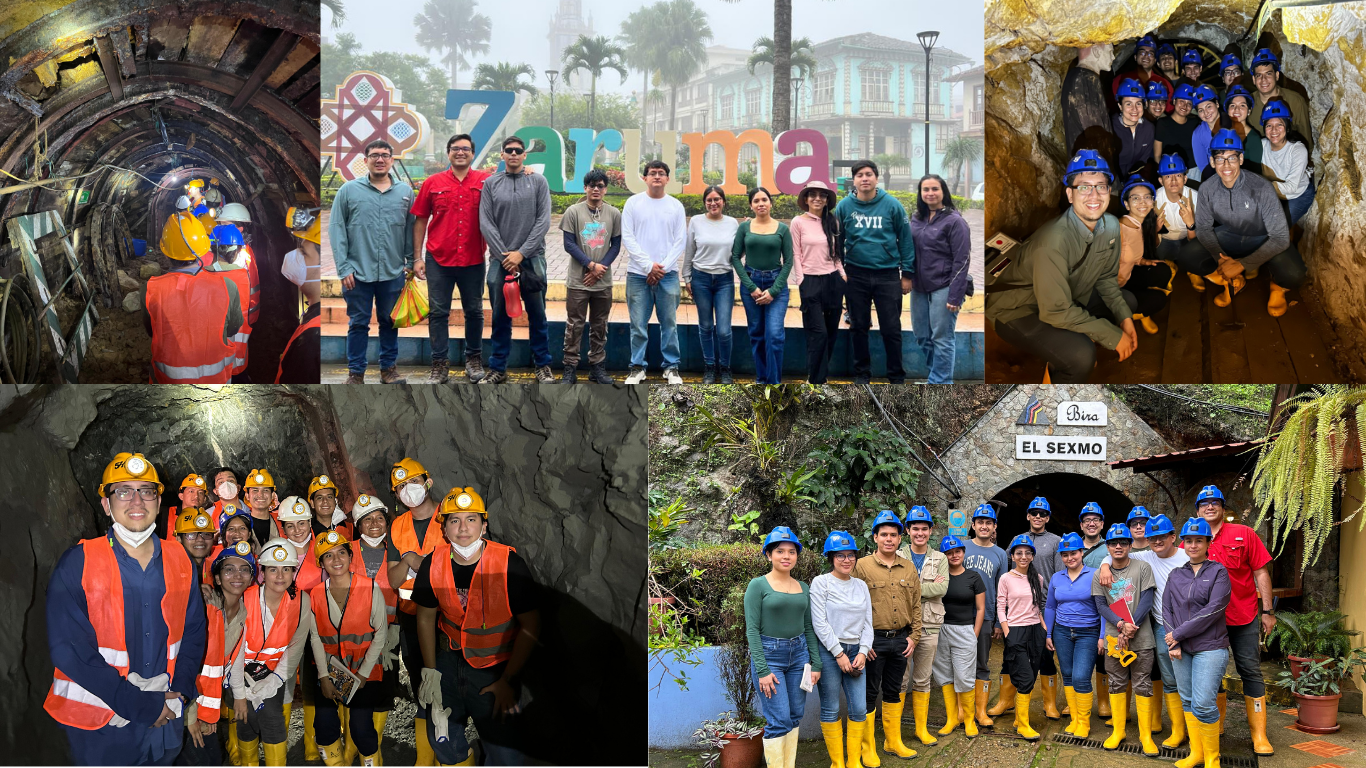
Likewise, students from the courses Geology of Ecuador and General Geology, led by Joselyne Solórzano, M.Sc., deepened their understanding of the local geology, the historical and economic relevance of the Zaruma–Portovelo mining district, and the role played by geologists within a mine. During the tour, they identified geological structures, types of mineralization, and geological processes characteristic of the area.
The participation of companies from the mining sector in this type of activity is of great importance, as it strengthens the link between academia and industry, facilitates the exchange of knowledge, and allows students to gain firsthand insight into the realities of the professional field. These partnerships contribute to the training of better-prepared professionals who are committed to sustainable development and possess a comprehensive vision of responsible mining.
Initiatives such as this reaffirm the commitment of the Geology program to providing high-quality, practice-oriented education that is closely connected to the country’s productive and social environment.