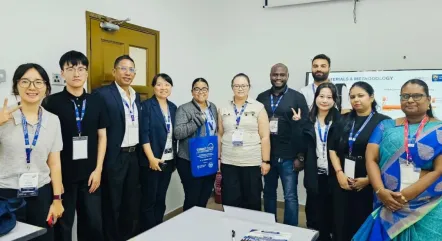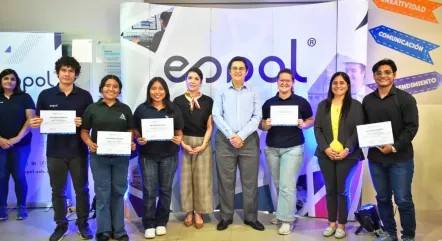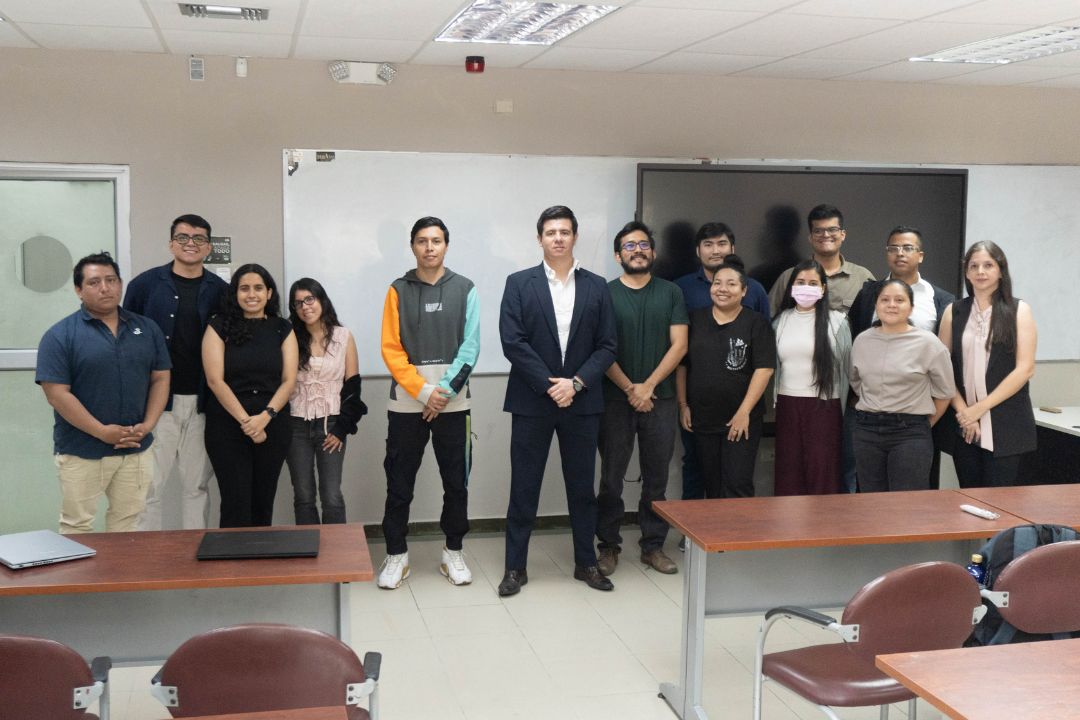


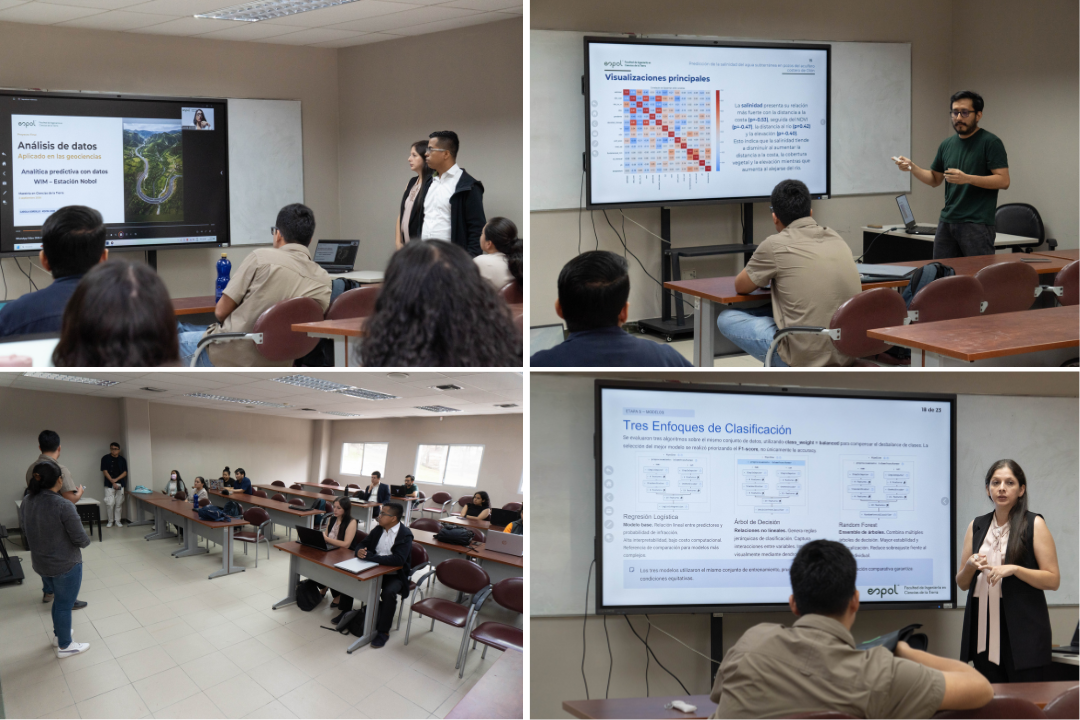
On Thursday, September 3, in the Reading Room of the Faculty of Geosciences Engineering (FICT), students from the third cohort of the Master’s in Earth Sciences program presented the projects they developed in the “Data Analytics Applied to Engineering” module.
The projects focused on applying data analysis techniques and training predictive models to address problems in the geosciences and other areas of engineering. The proposals included applications in mining engineering, petroleum engineering, geology, civil engineering, and chemical engineering.
During the module, students integrated data analytics, programming, and predictive modeling tools with problems specific to their fields of specialization. This process enabled them to interpret data, evaluate results, and apply computational methodologies in real-world engineering contexts.
The project presentations took place under the guidance of the module’s instructor, Freddy Carrión, M.Sc., and provided an opportunity to share the results obtained during the training process. The proposals demonstrated the application of predictive models to analyze information and generate decision-support tools in various engineering fields.
The incorporation of these tools into graduate-level education allows for the integration of specialized knowledge with data analysis and modeling methodologies. In this way, the program contributes to the development of skills needed to address engineering problems using data-driven approaches.
Related SDG:
SDG 4: Quality Education, through the strengthening of graduate education and the development of specialized skills in data analytics, programming, and predictive modeling.
SDG 9: Industry, Innovation, and Infrastructure, through the application of computational tools and predictive models to address engineering problems and support decision-making.