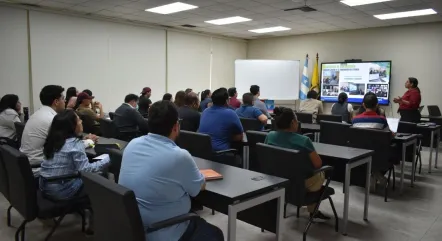
As part of the outreach activities of the UNESCO Chair in Geosciences Applied to Sustainable Development, a workshop was held to raise awareness of the Kamanchaka phenomenon and its relationship with ecosystem services in coastal areas.
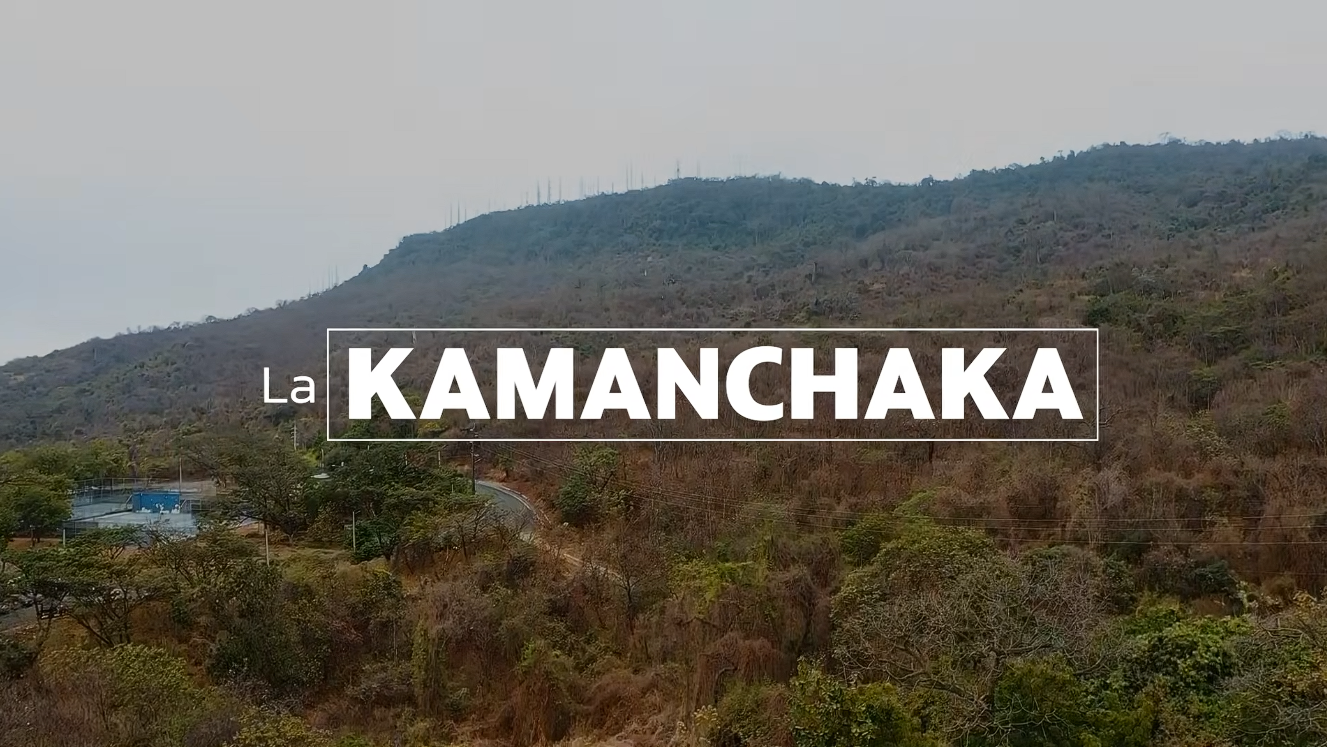
Kamanchaka is a coastal fog caused by the interaction between moisture from the Pacific Ocean and the cold Humboldt Current. It forms fog banks capable of sustaining life in areas with low rainfall.
In the Prosperina Protected Forest, this phenomenon plays a key role by acting as a natural source of water collection. The condensation of moisture on vegetation and soil contributes to the recharge of the ecosystem, favoring the survival of native species, regulating local temperature, and maintaining humidity during dry periods.
This invisible but constant water supply sustains essential ecological processes such as plant regeneration, biodiversity conservation, and microhabitat stability.
The UNESCO Chair promotes the recovery and dissemination of these natural hydrological processes, highlighting their importance for ecosystem balance and adaptation to climate change.