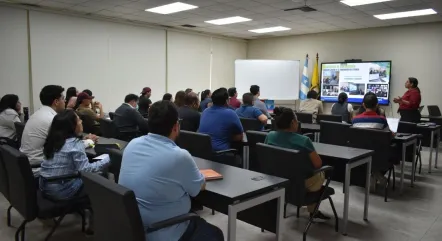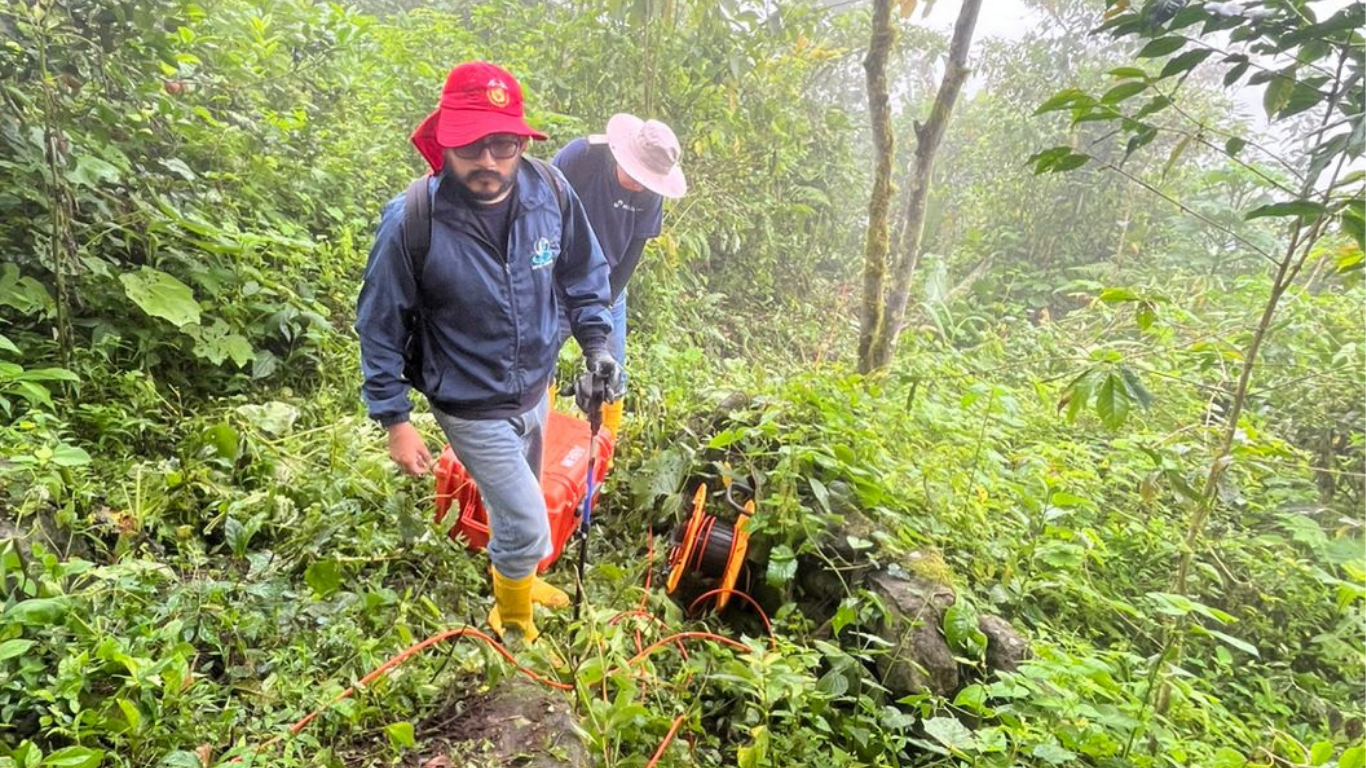


As part of applied research activities, researchers from the Faculty of Geosciences Engineering (FICT) at ESPOL conducted a field trip and technical visit to the Minas San Francisco Power Plant. The objective was to perform geoelectrical studies focused on subsurface characterization and the management of risks associated with water seepage."
"During the site visit, geoelectrical tests were carried out, including Electrical Resistivity Tomographies (ERT) reaching depths of up to 80 meters, as well as Vertical Electrical Soundings (VES) reaching approximate depths of 500 meters. These measurements will allow for the adjustment and improvement of geoelectrical models in areas where water seepage occurs.
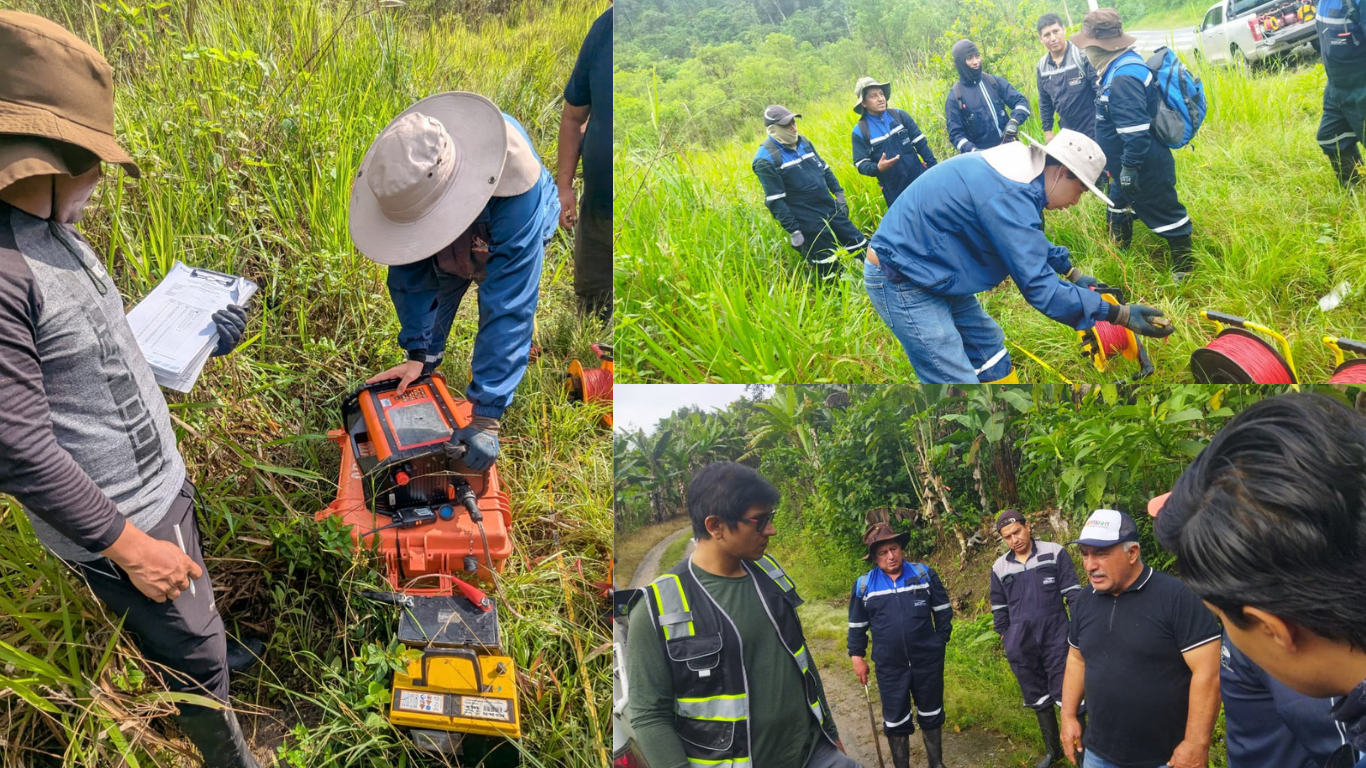
The identification of saturated zones and sectors with potential geotechnical instability constitutes a key technical input for decision-making. The results obtained will enable the Ecuadorian Electricity Corporation (CELEC E.P.) to propose control measures and strategies, as well as guide future drilling operations to validate the developed geoelectrical models."
The activity featured the participation of a multidisciplinary team composed of:
Jonathan Chica, M.Sc., Project Researcher.
José Daniel Maldonado, Project Researcher.
Kevin Padilla, Project Researcher.
Robert Brito, Project Researcher.
Miguel Calderón and Manuel Cuenca, Geological Engineers from CELEC E.P., along with specialized technicians from the institution.
This collaborative effort reinforces the link between academia and the productive sector, promoting the use of advanced geophysical tools for energy infrastructure and the reduction of geotechnical risks.
The field trip aligns with the Sustainable Development Goals (SDGs), specifically SDG 9: Industry, Innovation, and Infrastructure; SDG 11: Sustainable Cities and Communities; and SDG 17: Partnerships for the Goals, highlighting the institutional commitment to applied research and sustainable development.